Follow us

How to Build a B2B Lead Generation Strategy Beyond Social Media

Kaaviya P October 8, 2026

Introduction

Social media has become an important part of modern marketing, but for B2B businesses, it should not be the only source of leads. B2B buying decisions often involve multiple stakeholders, longer sales cycles, and a strong emphasis on trust and relationships.

A successful B2B lead generation strategy therefore needs to go beyond social media and combine digital outreach with direct business development.

Table of Contents

1. Use LinkedIn for Targeted Prospecting

LinkedIn is more than a content platform. It can help businesses identify decision-makers such as founders, procurement managers, operations heads, and business development professionals.


Instead of sending generic sales messages, businesses should research their prospects, understand their requirements, and start relevant conversations.

2. Build a Reliable Business Database

A structured database helps sales teams identify and manage potential customers. It can include:


  • Company and industry
  • Location
  • Contact person and designation
  • Email and phone
  • Business requirements
  • Lead status
  • Follow-up date
ChatGPT Image Oct 6, 2026, 04_42_06 PM

Regularly updating this information makes prospecting more organized and improves follow-up.

3. Leverage Networking and Exhibitions

Industry events, exhibitions, conferences, and professional networking provide opportunities to meet potential customers face-to-face.


Before attending an exhibition, businesses should identify target companies and decision-makers. After the event, timely follow-up is essential to turn conversations into genuine opportunities.


Networking also helps businesses build relationships that may lead to future sales, partnerships, or referrals.

4. Develop Strategic Partnerships

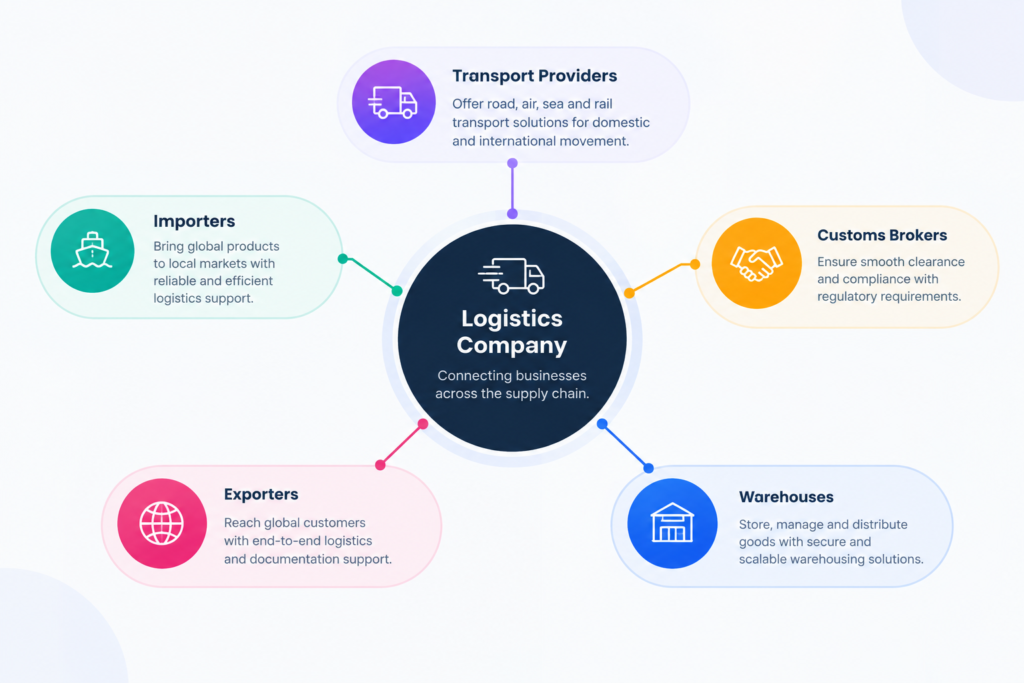
Partnerships can provide access to new markets and customer groups. Businesses can collaborate with complementary companies that serve the same target audience.


For example, logistics companies can build relationships with transport providers, customs brokers, warehouses, exporters, and importers.

A strong partnership creates value for both businesses while expanding their reach.

5. Turn Customers into Referral Sources

Satisfied customers can become one of the most valuable sources of new B2B leads. Businesses can encourage referrals by maintaining strong relationships and asking existing customers for relevant introductions.


Satisfied Customer → Referral → Qualified Lead → Business Opportunity


Referrals also provide an important advantage: the initial trust has already been established.

6. Follow Up Consistently

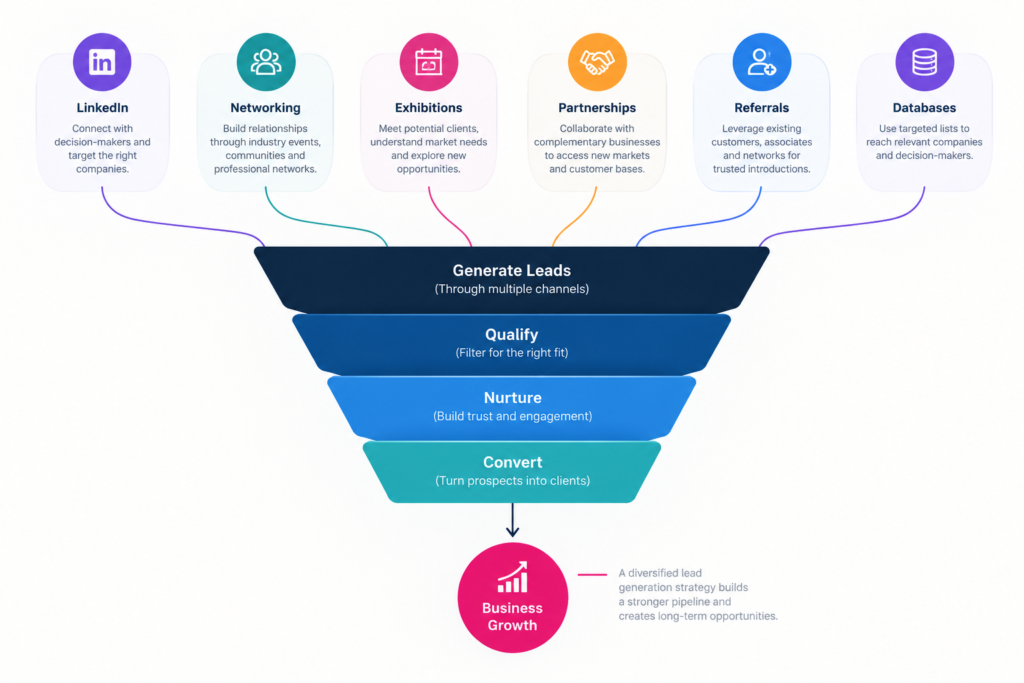
Generating a lead is only the beginning. Many B2B opportunities are lost because businesses fail to follow up at the right time. A simple process can be:


Identify → Contact → Qualify → Follow Up → Convert


Every qualified lead should have a clear next action and follow-up date.

7. Building a Multi-Channel B2B Strategy

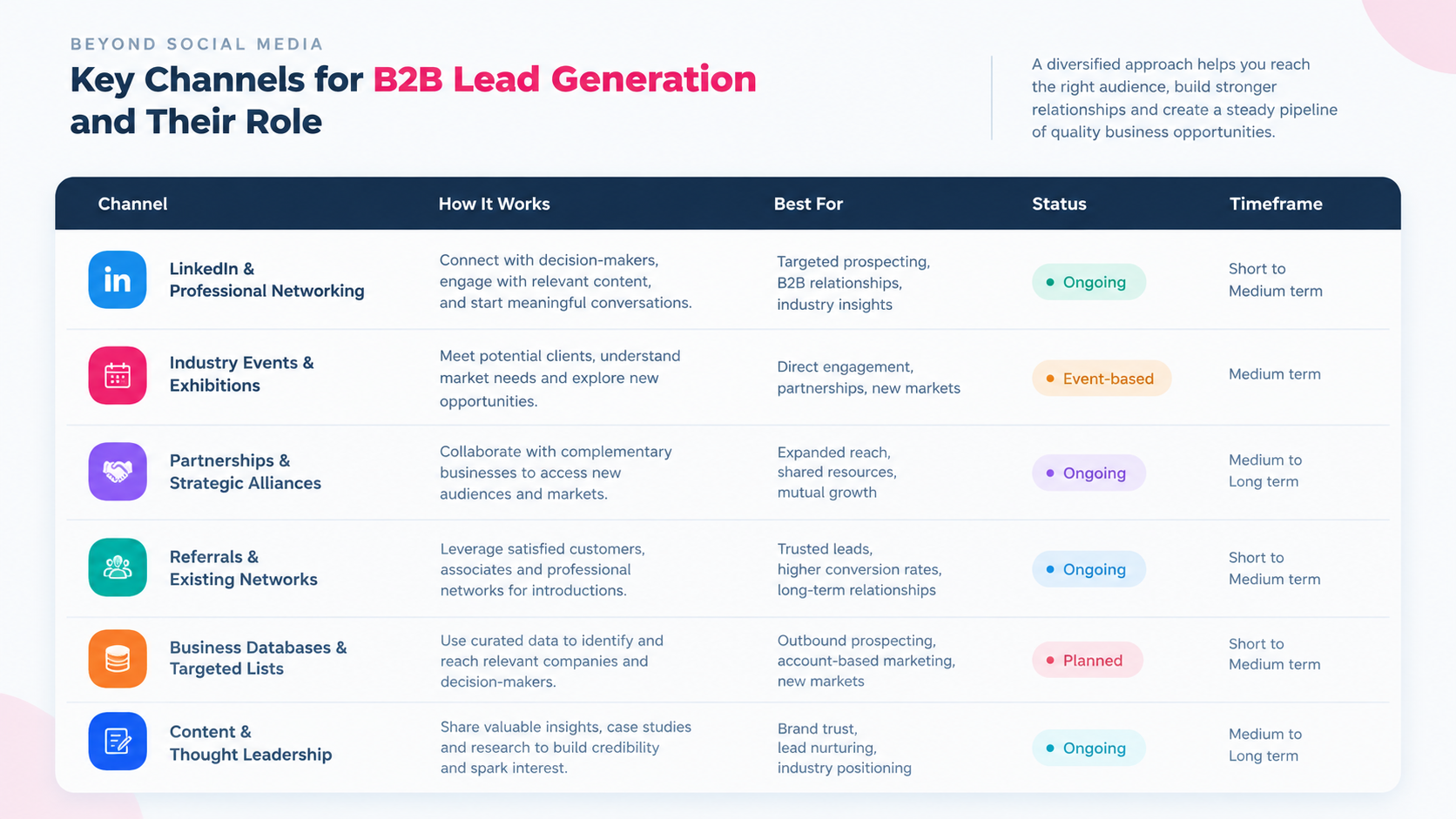
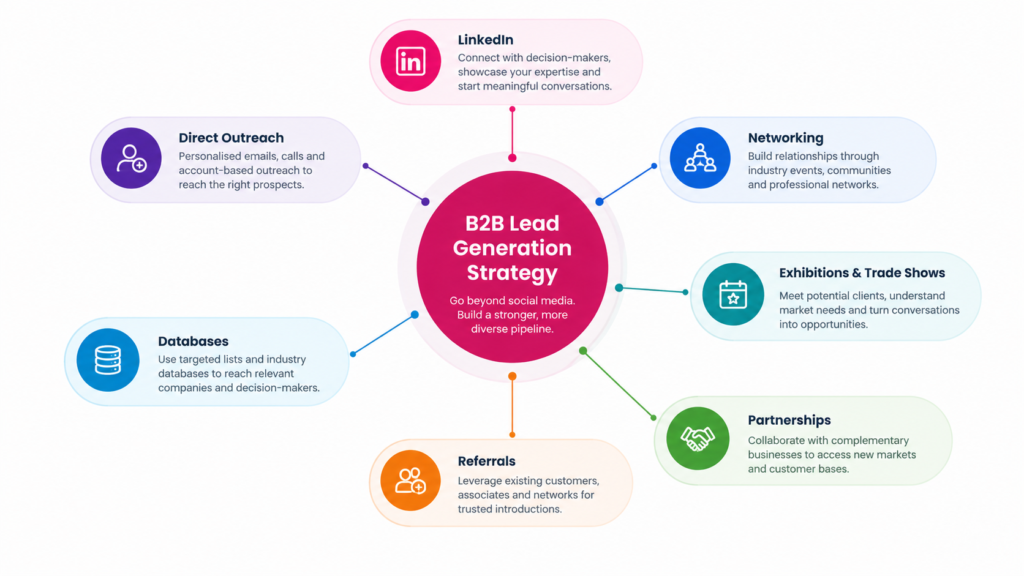
The most effective B2B lead generation strategies combine multiple channels:


LinkedIn + Networking + Exhibitions + Partnerships + Referrals + Databases + Direct Outreach

Each channel serves a different purpose. Together, they create a more reliable pipeline and reduce dependence on any single platform.

StudioForge Insight

B2B lead generation is about finding the right prospects, understanding their needs, and building meaningful business relationships.


A diversified approach helps businesses create better opportunities beyond social media.

Conclusion

A strong B2B strategy combines LinkedIn, networking, exhibitions, partnerships, referrals, databases, and direct outreach.


The focus should not be on generating more leads, but on finding the right prospects and turning them into long-term customers.