Follow us

KPR Mills: From a Local Textile Unit to a Global Brand — And What Its Growth Tells Us About the Market

Niffiya Sulthana April 24, 2026

Origins & Growth Trajectory

KPR Mill Limited was established in 1984 as a spinning mill in Tamil Nadu and has evolved into a vertically integrated textile and ethanol enterprise. Its expansion across yarn, fabric, garments, and sugar-ethanol reflects a value chain integration strategy, often highlighted in textile market research India as a key driver of long-term competitiveness.

From a market intelligence and growth strategy perspective, KPR’s journey mirrors broader shifts in the textile industry demand forecasting landscape:

  • Transition from commodity yarn exports to value-added garment manufacturing
  • Diversification aligned with consumer behaviour in apparel industry trends
  • Movement toward data-driven decision-making in textile sector growth strategy

Product Portfolio & Revenue Mix Intelligence

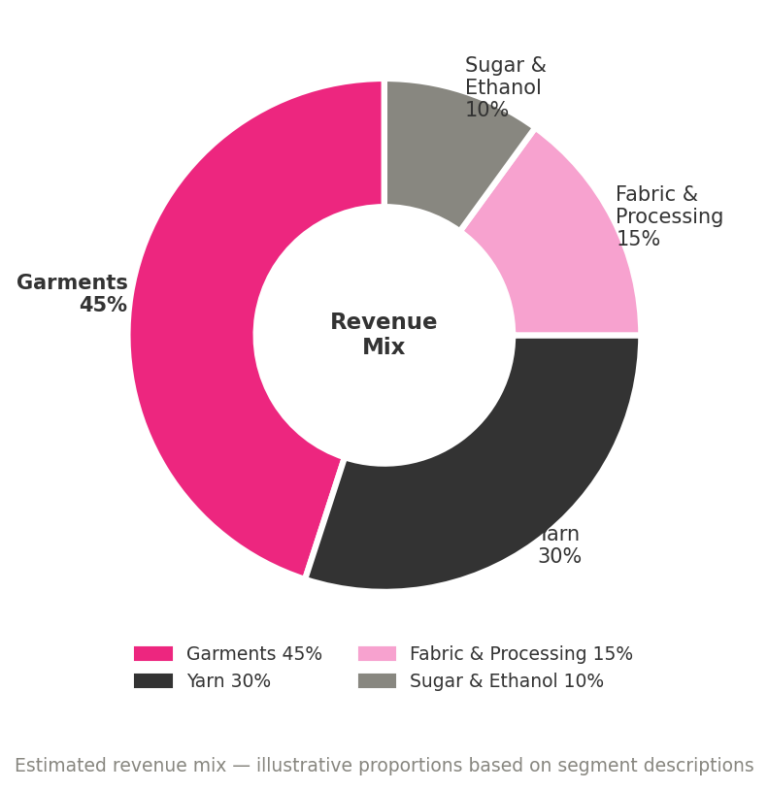
KPR Mill operates across multiple segments, each aligned with different layers of the textile value chain and supported by consumer insights and B2B buyer behaviour analysis:

  • Yarn (price-sensitive, commodity-driven)
  • Fabric & Processing (quality-focused mid-value segment)
  • Garments (high-margin, demand-driven export category)
  • Sugar & Ethanol (diversified, policy-backed revenue stream)

The company’s shift toward garments reflects insights commonly identified in garment export market analysis and apparel consumption analytics, where demand is increasingly influenced by end-consumer trends rather than raw material cycles.

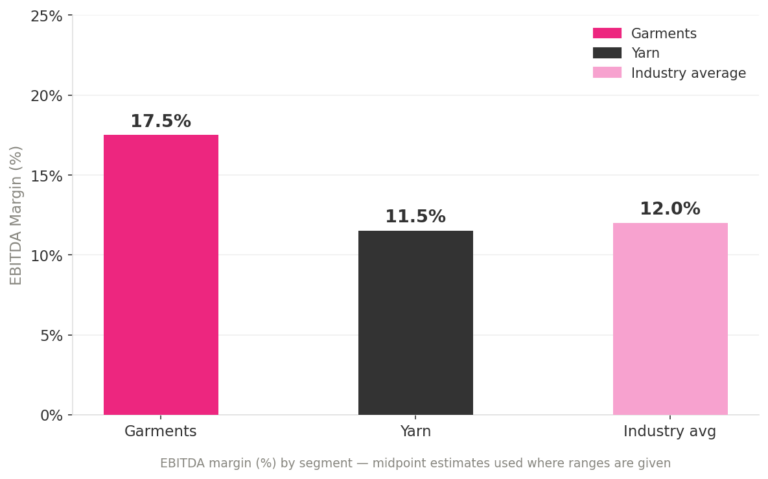
Garment exports typically deliver higher EBITDA margins (15–20%) compared to yarn (10–13%), reinforcing the importance of product portfolio optimisation using market research and competitive analysis in the textile industry.

Market Share & Competitive Positioning

Within the Indian textile ecosystem, KPR Mill Limited holds a strong position among integrated knitwear exporters, often referenced in textile industry competitive benchmarking studies.

Key performance indicators aligned with market intelligence for textile companies include:

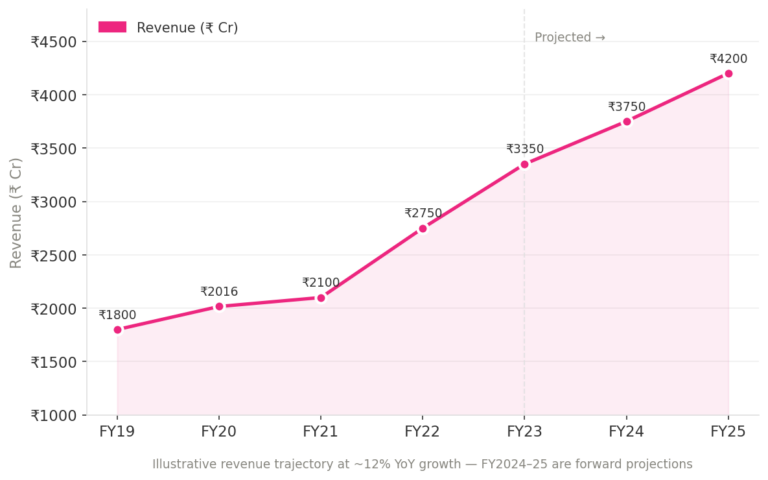
  • Around 12% year-on-year revenue growth outlook
  • 15–17% operating margins, above industry averages
  • High capacity utilisation (>90%) in garments
  • Strong export presence in Europe, a key region in export market insights for apparel industry

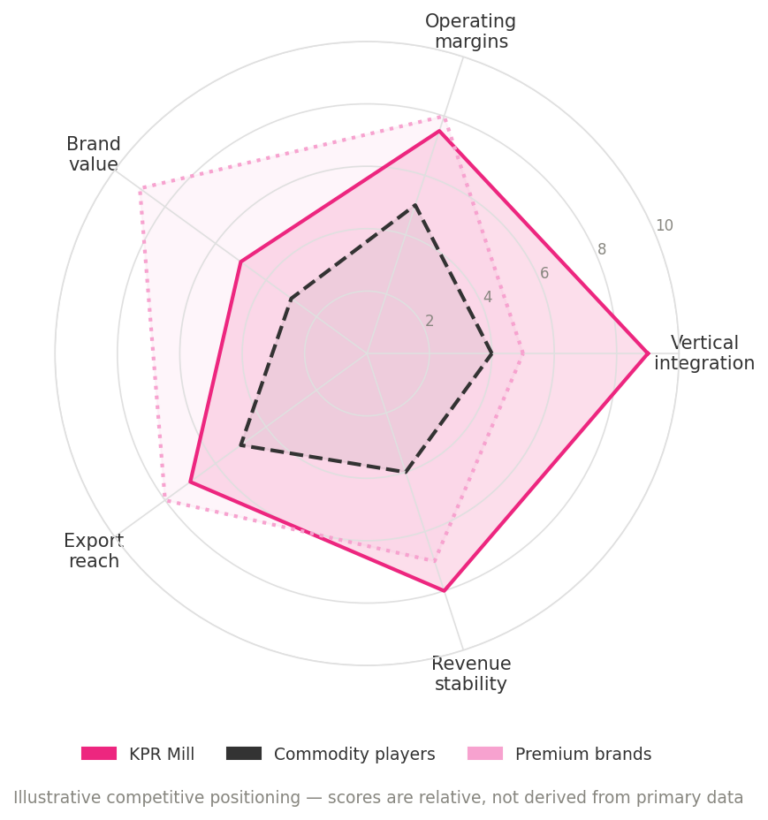
From a competitive positioning strategy standpoint, KPR operates in a mid-premium segment:

  • More efficient than commodity players due to integration
  • Less brand-driven than premium apparel companies
  • More stable due to diversification into ethanol

This positioning reflects a balanced growth model identified in textile sector market research and strategic consulting frameworks.

Consumer Behaviour & Demand Analytics in Textile Industry

The textile industry is increasingly influenced by consumer behaviour analytics and demand forecasting models, even within B2B export markets.

Key insights from consumer intelligence in apparel industry research include:

  • Rapid shift toward fast fashion and shorter production cycles
  • Rising demand for sustainable and ESG-compliant textiles
  • Increasing importance of price-value segmentation in global apparel markets
  • Geographic demand shifts toward Europe and emerging markets

These trends directly impact KPR’s strategy, reinforcing the need for:

  • Export market intelligence and regional demand analysis
  • Alignment with global apparel consumption trends
  • Integration of real-time market insights into production planning

Institutional Ecosystem & Talent Strategy

A distinctive aspect of KPR Mill Limited is its institutional ecosystem, including KPR Institute of Engineering and Technology and associated arts and science colleges.

From a market positioning and long-term strategy perspective, this contributes to:

  • A continuous talent pipeline aligned with industrial workforce analytics
  • Strengthened corporate branding in both education and manufacturing sectors
  • Enhanced operational capabilities supported by skill development ecosystems

This integrated approach is often identified in industry research as a competitive advantage in manufacturing-led growth models.

Growth Drivers Supported by Market Research

Several forward-looking growth drivers align with insights from textile market research and industry trend analysis:

  • Expansion in garments supported by high global apparel demand forecasting
  • Growth in ethanol driven by policy-backed industrial diversification strategies
  • Export realignment toward Europe based on geographic demand intelligence

These factors highlight the importance of data-driven growth strategy in the textile sector, where market conditions are increasingly dynamic.

Industry Gaps Identified Through Market Intelligence

Despite strong operational capabilities, many textile companies—including integrated players—face challenges identified in market research reports and competitive intelligence studies:

  • Limited adoption of real-time market intelligence systems
  • Gaps in consumer behaviour analytics integration
  • Reactive rather than proactive export market strategies
  • Lack of structured demand forecasting and predictive analytics

Addressing these gaps is critical for improving:

  • Capacity utilisation efficiency
  • Product mix optimisation
  • Margin sustainability

Role of Strategic Market Research in Textile Industry Growth

Studio Forge works with textile and manufacturing companies by delivering advanced market research, consumer intelligence, and strategic consulting solutions.

Through textile industry market analysis and growth strategy consulting, Studio Forge enables:

  • Identification of high-growth markets using export market intelligence and demand forecasting tools
  • Deep insights into consumer behaviour in apparel industry and B2B buyer expectations
  • Data-backed decisions on product strategy, diversification, and capacity expansion
  • Competitive benchmarking through industry analysis and positioning frameworks

This approach aligns with the increasing need for data-driven decision-making in textile companies, where insight-led strategies outperform traditional models.

1. What does KPR Mill specialize in?

KPR Mill Limited specializes in yarn, fabric, garments, and ethanol production, operating as a vertically integrated textile company. Its focus on garments aligns with trends identified in garment export market analysis.

KPR Mill holds a strong position among integrated textile exporters, particularly in knitwear and garments. It is often categorized within the mid-premium segment in textile industry competitive analysis.

The garment segment offers higher margins and is driven by end-consumer demand. Insights from consumer behaviour in apparel industry studies show that value-added products generate more stable and scalable revenue.

Consumer behaviour influences product demand, sustainability expectations, and pricing strategies. Textile companies rely on consumer intelligence and demand forecasting to stay competitive in global markets.

Key challenges include fluctuating global demand, lack of real-time market intelligence, and evolving consumer preferences. These are commonly highlighted in textile market research India and industry reports.

Studio Forge provides market research, consumer intelligence, competitive analysis, and growth strategy consulting to help textile companies make data-driven decisions and expand effectively.

Market research enables companies to understand demand trends, optimise product mix, and identify growth opportunities. It plays a critical role in long-term strategy within the textile industry.